Category: Community

Works by community theatres

  • Rock of Ages

    Rock of Ages

    Having previously experienced Rock of Ages both on stage and backstage, taking a seat in the audience for the first time offered a completely new perspective on the show and it turns out there were a few scenes I didn’t even know existed! While jukebox musicals can often feel clunky, Rock of Ages stands out because even though it’s supposed to be cheesy, the tracks actually fit the narrative flow quite naturally. Marloo’s cast did a fantastic job of keeping in the ‘rock’ and avoiding the overly polished ‘pop’ sound of the movie and Glee renditions.

    The production team did a wonderful job utilising the Marloo stage. Great placement of the live band and a clever rotating corner piece for scenes set outside the bar kept transitions crisp, while the Venus Club pole position and reveal was executed exceptionally well. The costumes captured the era well, though I felt a few pieces leaned slightly more modern.

    Allowing audience members to come up on stage to buy a drink from the onstage bar before the show, and chat with the cast in character, was a lovely, immersive touch that brought the audience right into the world of the show, with the signature and delicious ‘Sherrie Bomb’ cocktail setting the mood perfectly. Paired with Devlin Turbin’s phenomenal lighting design throughout, the visual elements looked great while actively driving the storytelling and setting the mood for every scene.


    Musically, the band was fantastic and their mix was mostly solid, interacting brilliantly with the characters on stage, even if a few guitar solos got a little lost in the overall sound. The sound team certainly had their hands full managing such a complex show and the mix did encounter some hurdles on our night – a few mics were late opening on dialogue, and during high-energy moments where the band, backing vocals, and quick dialogue overlapped, some lines were swallowed up. A bit more balance between the ensemble harmonies and the lead lines would have helped the storytelling shine even brighter.

    Among the principal cast, Kailem Mollard’s Lonny and Luke Miller’s Dennis were very good together, complementing each other effortlessly. Lonny was a delight as the narrator, bringing fantastic comedic timing, while Dennis delivered a commanding and grounded but still comedic performance that anchored the show; their confession scene ‘Can’t Fight This Feeling’ was, as always, an absolute audience favourite. Christian Dichiera’s Stacee Jaxx was brilliantly cast, bringing great vocals and leaning into that hilariously sleazy rock-star persona with ease. Complete with an incredible pair of boots, his performance grew stronger as the night went on, and his scene with Sherrie in ‘I Hate Myself for Loving You’ was a comic highlight. Connie Wetherilt’s Regina and Riley Merigan’s Franz were a hilarious duo with wonderful comedic energy together, supported well by Steve Moloney as Hertz. Justice (Therese Cruise) brought a velvety, gorgeous tone to her songs, and leaving the audience wanting even more of her on stage is a testament to that lovely voice.

    In the lead roles, Adam Giltrow as Drew brought great heart and chemistry to his scenes with Sherrie (Clara Lee). It was clear his voice was taking a beating late in the season, requiring a lot of use of falsetto to navigate the demanding score, but his commitment never wavered. Sherrie was sweet and endearing, giving a lovely vocal performance, though it would have been fun to see her embrace ‘bad Sherrie’ with a bit more rock edge in her bigger numbers. Extra points to her for navigating the stage in those giant Pleasers.

    Surprisingly Rock of Ages’ score is a relentless vocal marathon, and vocal fatigue is a tough hurdle for any cast to navigate. While a few voices were unfortunately and understandably feeling the strain near the end of the season, the energy on stage remained highly enthusiastic. The choreography was punchy and ambitious, with two or three standout dancers leading the charge, even if it pushed some of the less experienced movers to their limits.

    The production flowed remarkably well, with Act 2 in particular moving at a fantastic pace. While an enthusiastic crowd is always a wonderful thing, a few eager applause breaks mid-scene occasionally cut into the show’s momentum, as some of those fast-paced transitions work best when they roll straight into the next moment, saving the biggest cheers for the curtain call.

    Despite the technical audio glitches and late-season vocal fatigue, Darlington Theatre Players delivered a genuinely fun, high-energy night out at Marloo Theatre that had the crowd having a blast. It was a great night out that the production team should be incredibly proud of. Wishing the entire cast and crew a fantastic and well deserved closing night tonight!

    Please note: the writer has previously worked with a number of members of this cast and production team. Image sourced from Marloo Theatre.

    Rock of Ages – Presented by Darlington Theatre Players

    July 3 – 25 2026
  • Bye Bye Birdie

    Bye Bye Birdie

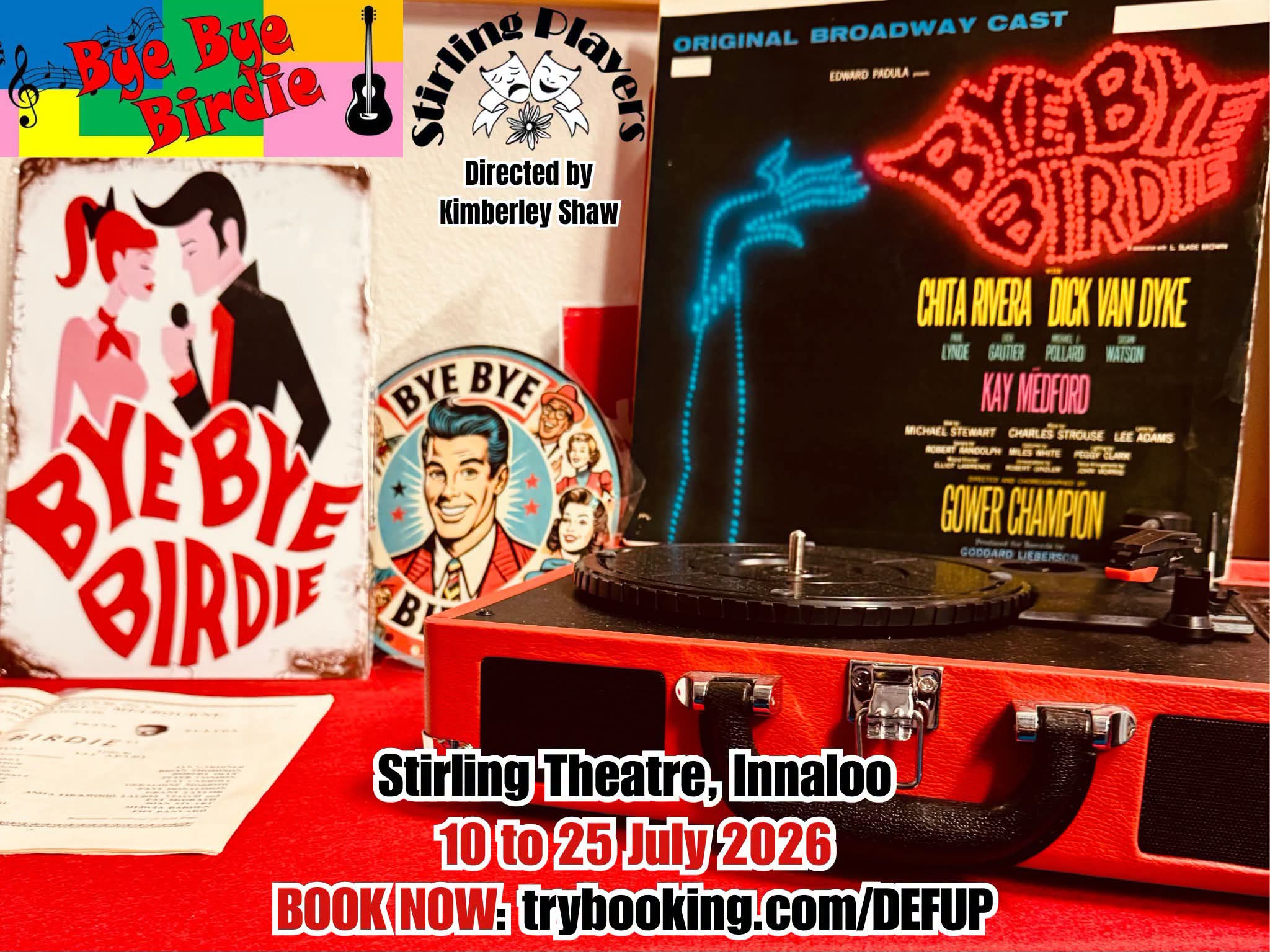
    Opening night of Stirling Players’ Bye Bye Birdie delivered an entertaining evening of theatrical fun. The production is driven by a wonderful blend of fresh-faced, promising young talent and seasoned community theatre veterans whose vibrant energy carried the show, even while navigating some noticeable musical hurdles along the way.

    A particularly beautiful highlight of the evening was a sentimental connection to the theatre’s own history: The club reached out to their original 1980s cast, bringing the original Ursula into the audience to be sweetly welcomed with flowers by her modern counterpart before the curtain rose. Serendipitously, I found myself sitting right next to her, and hearing her quietly humming along and laughing throughout the performance added a lovely, heartwarming layer to the night.

    Upon entering the theatre, the audience is greeted with brightly painted wings surrounding a simple stage. Visually, the production relies on a bright, minimalist aesthetic utilising AV and background projections, which functions beautifully to establish the shifting locations and allows for clean, efficient scene transitions.

    The choreography, although used sparingly, was incredibly dynamic and enthusiastic, and executed well, tying the story together effectively. The choreographer, Meesha Palman, successfully accommodated varying technical levels across the ensemble while playing beautifully to individual strengths, and the ensemble dance numbers provided excellent energy. ‘The Telephone Hour’ was particularly enjoyable to watch, as was the lovely routine between Harry and Doris McAfee, and the slapstick-driven movement scene when Rose invades the Shriners meeting. A particularly joyful highlight for me was the inclusion of some well-executed tap dancing in ‘Put on a Happy Face’; a style that has become tragically rare on community stages, providing a burst of classic theatrical energy that the featured dancers absolutely nailed.

    This vibrant momentum carries over into the performances, anchored by a very strong principal cast. Samuel Yeo’s Albert brings a lovely, warm vocal tone to the stage, sharing a believable and charming chemistry with Lily Kennedy’s Rose. The chaos of the narrative finds its comedic heartbeat in the McAfee family (played by Alex McLennan, Sue McLennan, and Heath Avila), while their daughter Kim (Ivy Wilton) delivers a beautifully engaging performance. Taj Chaplin’s Conrad brings the perfect swaggering energy to the stage, aided by some sharp wardrobe choices, and Julie Holmshaw’s comedic timing had the audience absolutely eating up her scenes as Mae.

    Musically, the cast deserves immense credit; they were entirely on top of their material, showing a level of vocal strength and absolute dedication that ultimately carried the evening. Going into the show fairly blind, without any knowledge of the book and only recognising a few numbers (‘Put On a Happy Face’ from one of my very first tap dances, and ‘Kids’ from an old episode of The Simpsons), the dialogue was very clear and the vocals were beautifully crisp with lovely diction, ensuring that every single word throughout the entire performance was easy to understand.

    Unfortunately, there was a persistent disconnect with the live band. It was clear the musical elements hadn’t fully cemented, resulting in a few awkward, elongated pauses where the actors had to wait on stage for the musicians to find their place in the score. These musical challenges were further compounded by the logistical realities of the space; with the band positioned in a separate room, the actors were forced to frequently break focus to check stage left for musical cues, leading to some awkward stares off-stage while they waited. While it would be ideal to strategically place monitors behind the audience to keep the cast looking out, I imagine the venue’s seating makes this structural addition impossible, otherwise it would have already been implemented.The sound was mostly good throughout the night. The mix was off in a few sections, swallowing some of the ensemble’s harmonies, and the mics unfortunately dropped out a few times, though these elements will undoubtedly improve as the season progresses. The orchestration felt quite sparse at points, and the reeds especially suffered from some rough tuning early on, though the musicians did begin to find their collective rhythm as the night went on. In saying that, the musical director and musicians did an incredible job coming together in the exceptionally short timeframe they had, and the band is sure to find their stride and get better with each performance.

    As a text, Bye Bye Birdie is an unapologetic relic of mid-century Americana, and although satirical, this production occasionally exposes how poorly parts of the script have aged. The score’s inclusion of ‘America the Beautiful’ as a simultaneous counter-melody in the ‘We Love You Conrad’ sections of ‘One Last Kiss’ felt a bit jarring given the current global political climate and created a bit of an awkward tonal disconnect for a contemporary audience. The script is scattered with dated references that were undoubtedly funny once, but they unfortunately miss the mark for a modern crowd, leaving younger generations (and likely the teenage cast itself) in the dark. This cultural disconnect also stumbles a bit in the handling of Rose. Through no fault of the performer—she was fantastic vocally and highly engaging—the writing of the character relies heavily on outdated tropes and without a performer of obvious Latina descent in the role, the musical number ‘Spanish Rose’ (delivered with an exaggerated, heightened accent) while I realise the intention of the song, crosses the line into an awkward caricature. For a modern staging, it raises valid creative questions about how we approach these dated pieces, and especially how we cast them.

    Ultimately, while the production’s pacing was occasionally disrupted by its frantic musical preparation, it is carried by the resilience, sharp movement, and infectious joy of its cast. It is a light, fun night of theatrical escapism, and the sheer volume of emerging talent on that stage suggests a very bright future for the local performing arts scene.

    Please note: the writer has previously worked with a number of members of this cast and production team. Image sourced from Stirling Players.

    Bye Bye Birdie – Presented by Stirling Players

    July 10 – 25 2026

  • Spring Awakening

    Spring Awakening

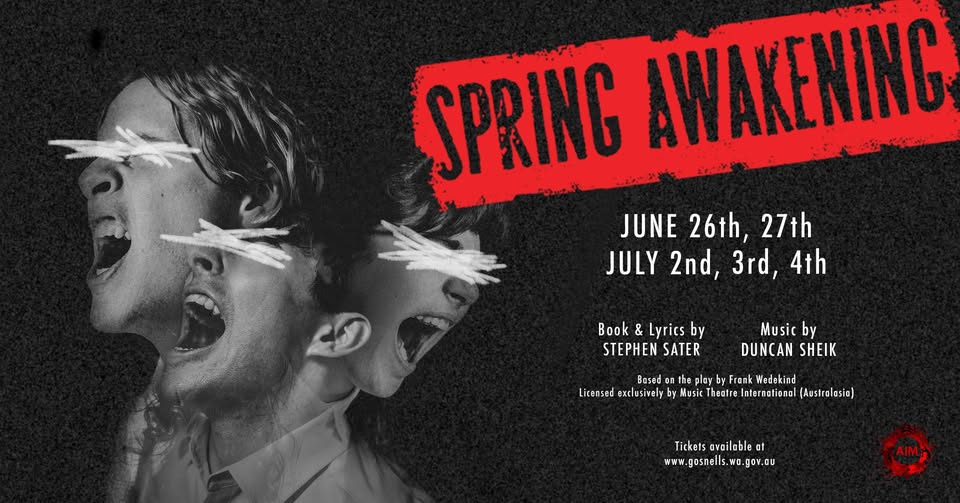
    The energy in the room was undeniably high for Art In Motion’s closing night of Spring Awakening, highlighting both the enduring relevance of the text and the unique challenges of staging it.

    The set design was effective, providing a smart, practical layout that allowed for quick, fluid scene changes. Although the stage was small, the production made excellent use of different levels, and while the space became crowded when the entire cast was on stage, the blocking worked well and the choreographed movement felt purposeful and instrumental in driving the story forward. A particularly strong choice occurred during the first school scene, where the male students were staged with their backs to the audience while enduring their lessons. This effectively created a sense of erasure, illustrating that they were not individual students but a conforming collective bound by societal rules. Meanwhile, the female students were isolated outside learning ‘female’ things, further highlighting the rigid enforcement of these societal norms.

    This sense of restriction was reinforced by the costume and lighting design, which leaned into a deliberate lack of colour for most of the show. By keeping the wardrobe rooted in a bleak, muted palette, the design underscored the oppressive conformity of the characters’ world. This restraint paired beautifully with the lighting design, which succeeded in injecting mood and telling the story where the physical world remained grey and was especially powerful in capturing the dramatic weight of Moritz’s death, utilising great timing by both the cast member and crew to make that tragic moment land with full impact. This visual restraint paid off in the final scene; after an evening of winter darkness, the cast finally emerged in vibrant colours for The Song of Purple Summer, providing a visually stunning and hopeful release from the heavy world they had built.

    Musically, the production soared highest when the company operated as a single unit. The big ensemble numbers, culminating in a spectacular final piece, were a definitive highlight of the evening, showcasing remarkably tight, rich harmonies. However, this vocal cohesion occasionally clashed with technical hurdles from the pit. There was a persistent, noticeable disconnect with the band (particularly within the violin line) that seemed to throw off the pitch and confidence of some of the vocalists. The drums were also far too loud in several moments, making it difficult to hear the cast and stripping away the emotional gravity of the scenes. With a relatively small band, careful mixing is absolutely vital; given the balance issues, it perhaps would have been better to position the musicians somewhere else rather than directly between the stage and the audience. While the enunciation was clear during the spoken dialogue, a lot of the lyrical content was lost during the musical numbers. While the ensemble found their collective strength, several of the soloists have yet to fully discover their own unique vocal identities, occasionally leaning into delivery that felt a bit too much like a carbon copy of the original cast album. In saying that, the duet between Ilse and Martha provided a standout musical moment, as did The Song of Purple Summer.

    This text remains a deeply important and highly relevant story to tell at this point in time, yet the actual weight of the narrative was occasionally undermined. Some of the direction and acting choices suggested that the true gravity of the text was not completely understood, which unfortunately kept the production from being as powerful as it should have been. While there were some funny moments, some parts were played far too goofy and comedically, prompting frequent giggling from the audience that stripped away the necessary drama and seriousness. The book itself is not the most cleanly written, and despite having seen the show before, there were still moments (particularly near the end) where the plot was difficult to follow.

    This issue was highlighted with the structural pacing. Likely a fault of how the show is written rather than the cast, the action frequently ground to a halt for musical numbers rather than allowing the music to flow naturally and elevate the story. The audience also seemed to miss the point of the narrative at times, treating the performance like a concert by applauding after each song and pulling the action to a stop. Managing this tension ultimately falls on the director’s shoulders; the pacing should have been tight enough to deny the audience the opportunity to stop the show, keeping the dramatic momentum building straight into the next part of the scene.

    The production stumbled further in its consistency of detail, particularly regarding diction and specific creative choices. For a show rooted in classical academia, the Latin and German pronunciations (including the names of the characters themselves) were shaky and acted as a frequent distraction from the drama. Directorial choices also raised some questions: the decision to have the teacher be the sole character utilising a German accent felt entirely isolated. If the intent was to draw a stark line between the rigid older generation and the youth, it begged the question of why this choice wasn’t applied universally across all the adult roles.

    While the production occasionally struggled to maintain the narrative’s true dramatic gravity, the undeniable commitment of the entire company ensured it remained an engaging night of theatre.

    Please note: the writer has previously worked with a number of members of this cast and production team. Image sourced from Art in Motion.

    Spring Awakening – Presented by Art in Motion

    June 26 – July 4 2026